
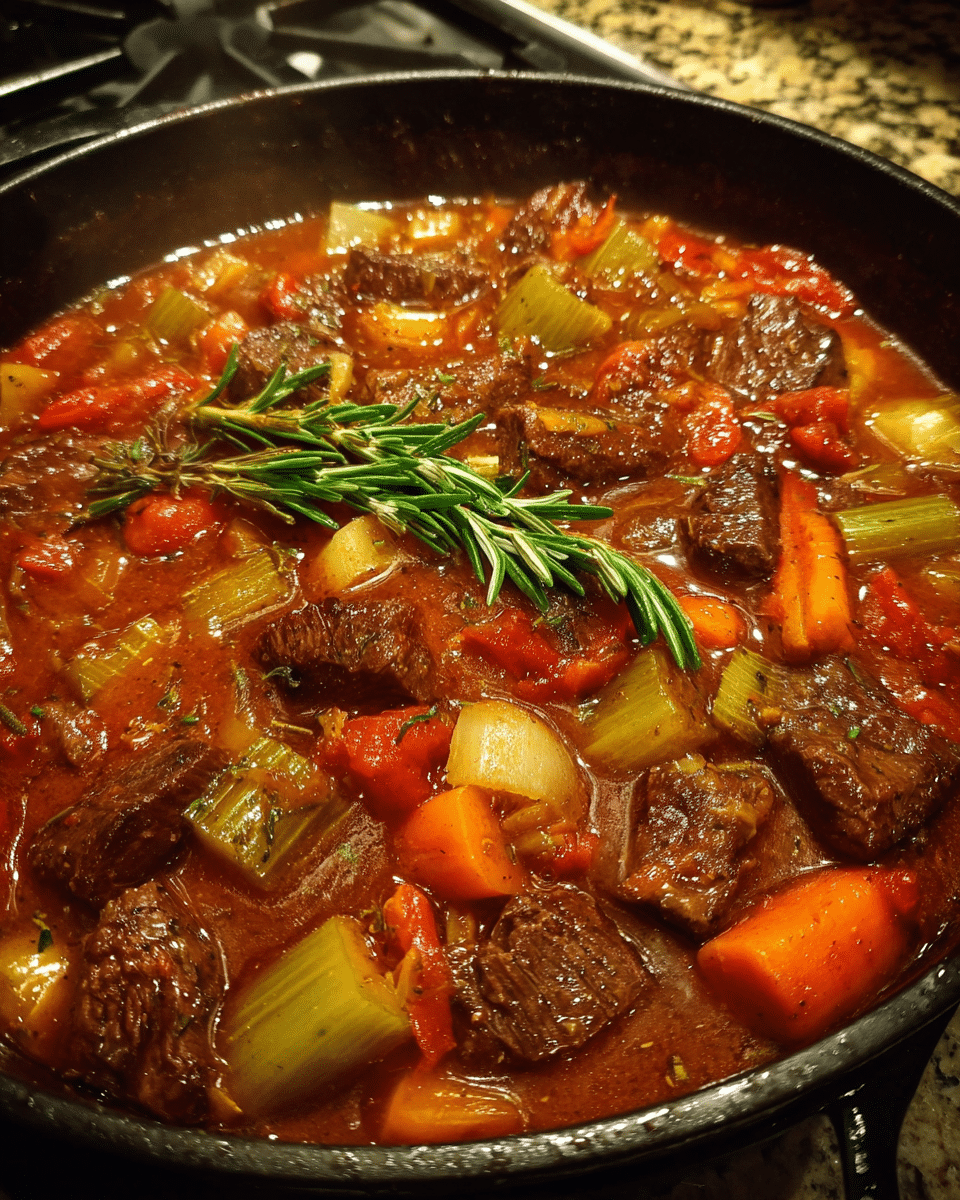
Fire-Roasted Tomato Beef Stew brings together slow-simmered beef, vegetables, and smoky tomatoes into one deeply satisfying dish. This recipe focuses on bold flavor without complicated steps, making it ideal for home cooks who value reliable results. By building layers through browning, gentle simmering, and careful seasoning, this stew delivers warmth and balance in every bowl. The combination of rosemary, paprika, and fire-roasted tomatoes creates richness that tastes developed rather than heavy. If you enjoy classic comfort food with a modern, confident edge, this dish fits beautifully into your cooking routine.
Fire-Roasted Tomato Beef Stew for Deep, Comforting Flavor
- Total Time: 2 hours 30 minutes
- Yield: 4 servings
Description
A hearty beef stew made with fire-roasted tomatoes, vegetables, and herbs, slowly simmered for deep flavor.
Ingredients
1 pound beef stew meat, cut into bite-size cubes
2 tablespoons olive oil, divided
2 medium onions, chopped
4 garlic cloves, minced
4 celery stalks, cut into ½-inch pieces
6 carrots, peeled and cut into ½-inch pieces
1 (14-ounce) can fire-roasted tomatoes
4 cups beef broth
2 fresh rosemary sprigs
2 bay leaves
1 teaspoon smoked paprika
Salt and black pepper, to taste
Instructions
1. Heat 1 tablespoon olive oil in a large pot over high heat. Brown beef in batches and set aside.
2. Reduce heat to medium, add remaining olive oil, and cook onions until softened.
3. Add garlic, celery, and carrots; cook until vegetables begin to soften.
4. Return beef to pot and add tomatoes, broth, rosemary, bay leaves, and paprika.
5. Bring to a gentle boil, then reduce heat and simmer covered for 1½ to 2 hours.
6. Remove herbs, season with salt and pepper, and serve hot.
Notes
This stew tastes even better the next day and freezes well for future meals.
- Prep Time: 30 minutes
- Cook Time: 2 hours
- Category: Soups & Stews
- Method: Stovetop simmering
- Cuisine: American
Why Fire-Roasted Tomato Beef Stew Delivers Bold Results
Fire-Roasted Tomato Beef Stew and smoky tomato depth
Fire-roasted tomatoes bring a subtle charred note that standard canned tomatoes cannot match. That light smokiness supports the beef rather than overpowering it, creating a rounded base flavor. As the stew cooks, the tomatoes break down and thicken the broth naturally, giving the dish body without extra ingredients.
Fire-Roasted Tomato Beef Stew built for slow simmering
This stew benefits from time. Gentle heat allows connective tissue in the beef to soften, resulting in tender, juicy pieces. Slow cooking also gives herbs and spices room to infuse the broth evenly, which leads to a consistent taste from the first spoonful to the last.
Fire-Roasted Tomato Beef Stew as a cold-weather staple
Few meals feel as grounding as a pot of stew simmering on the stove. This recipe suits cooler evenings, weekend cooking, and make-ahead meals. It fills the kitchen with inviting aroma and delivers comfort that feels intentional rather than rushed.
Ingredients That Shape Fire-Roasted Tomato Beef Stew
Fire-Roasted Tomato Beef Stew and the right beef cut
Beef stew meat works well because it contains enough marbling to stay moist during long cooking. Cutting the meat into even cubes ensures consistent browning and tenderness. Proper searing builds flavor that carries through the entire dish.
Fire-Roasted Tomato Beef Stew with aromatic vegetables
Onions, garlic, celery, and carrots form a classic aromatic base. These vegetables soften during cooking and subtly sweeten the broth. Their structure also helps balance the richness of the beef and tomatoes.
Fire-Roasted Tomato Beef Stew seasoning balance
Rosemary, bay leaves, and smoked paprika give this stew its signature character. Rosemary adds an earthy note, bay leaves provide depth, and paprika reinforces the fire-roasted tomato flavor. Salt and black pepper should be adjusted at the end to maintain control over seasoning.
Cooking Techniques for Fire-Roasted Tomato Beef Stew
Fire-Roasted Tomato Beef Stew starts with proper browning
Browning the beef in batches prevents steaming and encourages caramelization. This step creates fond on the pot, which later dissolves into the broth and boosts flavor. Skipping this stage results in a flatter tasting stew.
Fire-Roasted Tomato Beef Stew simmering method
Once all ingredients are combined, reducing the heat to low is essential. A gentle simmer avoids toughening the meat and allows flavors to merge gradually. Stirring occasionally prevents sticking and promotes even cooking.
Fire-Roasted Tomato Beef Stew flavor development tips
Removing herbs before serving keeps the flavor clean and balanced. Letting the stew rest for a few minutes off the heat before serving allows flavors to settle. Like many stews, it tastes even better the next day.
Serving Fire-Roasted Tomato Beef Stew for Any Occasion
Fire-Roasted Tomato Beef Stew for family dinners
This stew serves well as a complete meal. The combination of protein, vegetables, and broth feels filling without needing many sides. It works for weeknight dinners when prepared ahead or for relaxed weekend meals.
Fire-Roasted Tomato Beef Stew meal pairings
Crusty bread, rice, or mashed potatoes complement the broth and make serving easy. If you enjoy soup-based meals, you may also like creamy chicken and orzo soup, which offers a lighter but equally comforting option.
Fire-Roasted Tomato Beef Stew storage and reheating
Store leftovers in an airtight container in the refrigerator for up to four days. Reheat gently on the stovetop to preserve texture. This stew also freezes well, making it practical for meal planning.
Variations Inspired by Fire-Roasted Tomato Beef Stew
Fire-Roasted Tomato Beef Stew and African beef stew influence
African beef stew often includes tomatoes, slow-cooked meat, and warming spices. You can borrow that influence by adding a pinch of chili or warming spice blends for extra depth while keeping the core technique the same.
Fire-Roasted Tomato Beef Stew using ground beef ideas
If you prefer quicker cooking, ground beef can replace stew meat for a different texture. This approach resembles a ground beef tomato stew and reduces simmer time, though the flavor profile remains hearty.
Fire-Roasted Tomato Beef Stew spice adjustments
Adjusting paprika levels or adding herbs like thyme allows customization. For more tomato-forward dishes, you might also explore chicken meatball pasta and vegetable soup for variety within comforting meals.
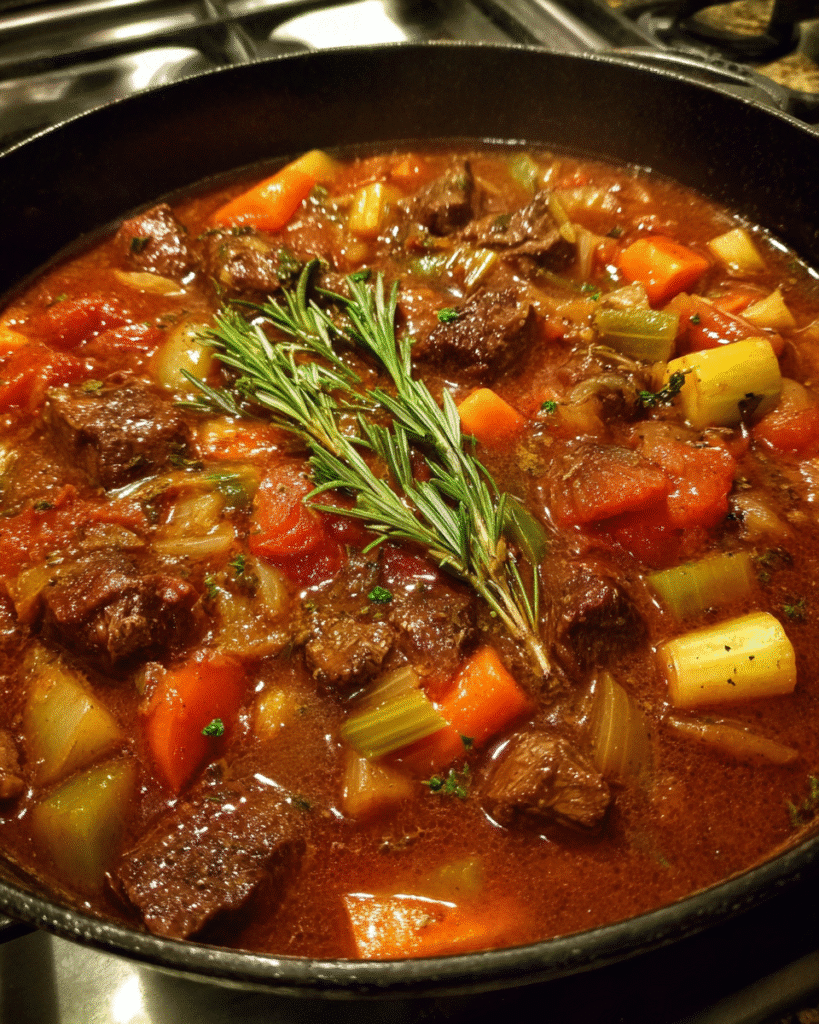
FAQs About Fire-Roasted Tomato Beef Stew
African beef stew
African beef stew typically features tomatoes, onions, and slow cooking, similar to this recipe. The main difference lies in spice choices, which can be adjusted based on preference.
Ground beef tomato stew
A ground beef tomato stew cooks faster and has a softer texture. While it lacks the chunkiness of stew meat, it works well for busy schedules.
Make-ahead and freezer questions
This stew improves with time and freezes well. Cool completely before freezing and thaw overnight in the refrigerator for best results.
Conclusion
Fire-Roasted Tomato Beef Stew stands out because it relies on sound technique, quality ingredients, and patience rather than shortcuts. Its smoky tomato base, tender beef, and balanced seasoning create a dependable meal that fits many occasions. Whether served fresh or reheated later, it delivers consistent comfort and flavor you can trust.
For more successful recipes, you can visit our Pinterest account